
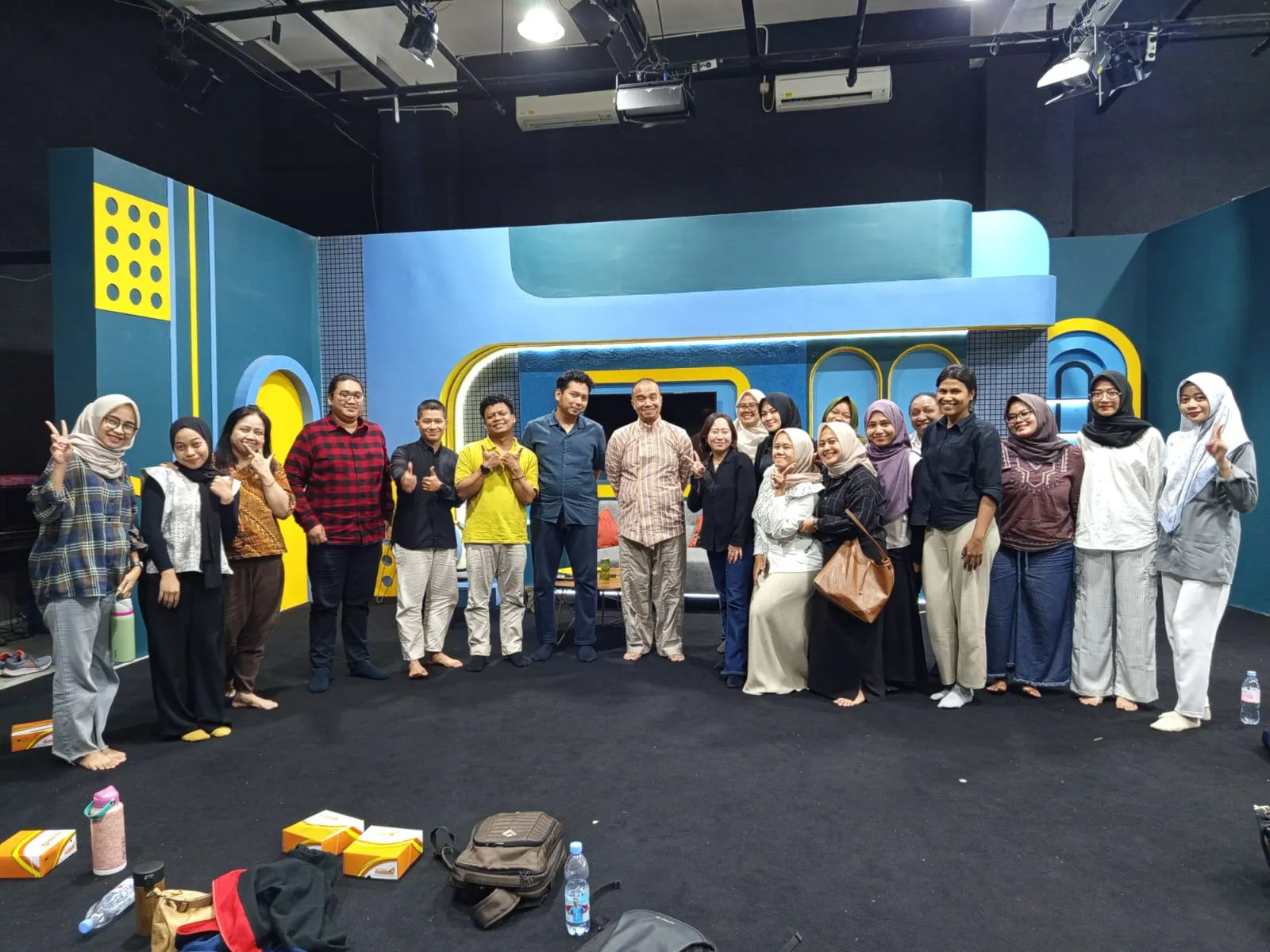
Semarang (15/11) – As part of its efforts to enhance academic quality and research excellence through the World Class University (WCU) Program, the Faculty of Social and Political Sciences (FISIP), Universitas Diponegoro, through the Department of Communication Science, held a public lecture titled “Writing Film Criticism or Film Studies: Building Aesthetic Arguments in Contextual Film Analysis” on November 4, 2025 at the FISIP Undip Multimedia Laboratory, Tembalang.
The lecture featured Tito Imanda, Ph.D., Head of Research and Development of the Indonesian Film Board (BPI), who highlighted the role of film criticism as a bridge connecting aesthetics, ideology, and social dynamics. The session was attended by postgraduate students of Communication Science, who are expected to develop reflective perspectives in analyzing film as a cultural text.
Dr. Hapsari Dwiningtyas Sulistyani, Head of the Media, Culture, and Gender Academic Expertise Cluster, stated that the program strengthens an academic ecosystem that fosters interdisciplinary thinking.
“In a visual and algorithmic era, film criticism is not merely about evaluating a work but about reading the signs of the times. We want students to understand how films represent values, identities, and ideologies operating within society,” she explained.
She added that this activity is part of the cluster’s mission to advance communication as a critical and contextual field of study.
“The WCU Program provides space for lecturers and students to engage directly with practitioners as well as researchers. This is crucial in cultivating sharp, reflective, and socially relevant perspectives in today’s landscape of cultural communication,” Dr. Hapsari noted.
Through its WCU initiatives, FISIP Undip continues to promote collaboration between academia and professional practitioners, reinforcing its position as a leading center for the development of social sciences and communication with global competitiveness.